


360° tours for visitors with reduced mobility in Romania
Presentation of the cultural institution
The Museum of Wood Art in Câmpulung Moldovenesc was selected as associated partner of ”Moldova” National Museum Complex of Iași, Romania, official partner in the REACT Project, already in the application writing phase. Later on, during the project implementation, two other museums of ethnographic profile answered positively to our invitation of becoming associated partners: the Princely Inn in Suceava, which is part of the ”Bucovina” National Museum Complex in Suceava, and the Ethnographic Museum of Botoșani, which is a branch of the Botoșani County Museum.
The Museum of Wood Art in Câmpulung Moldovenesc, Suceava County
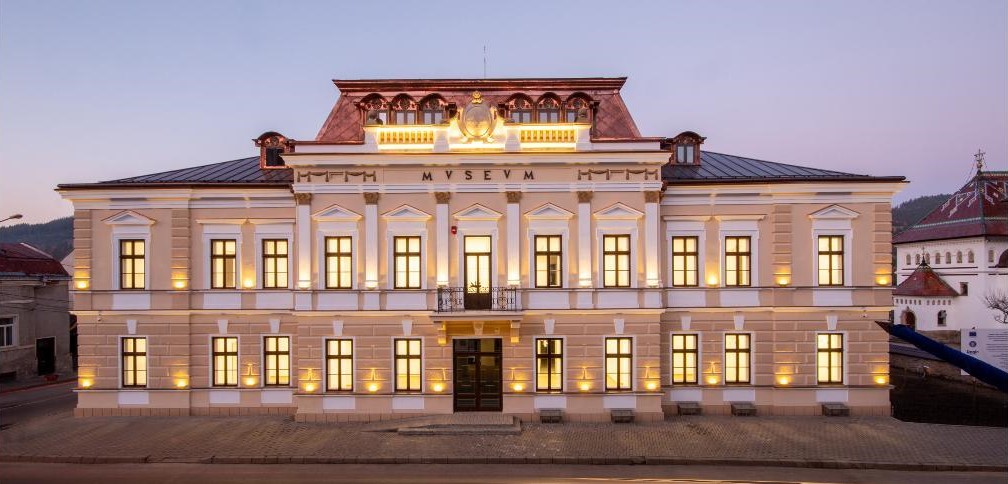
The Museum of Wood Art in Câmpulung Moldovenesc aims at providing the visitor with a trip into deep forest, where trees are cut to be then processed for utilitarian or artistic purposes.
In 1935 a committee was established by the local authorities of the time who made the decision of founding a museum, by inviting local people to donate items of ethnographic importance for the purpose. This is how the official opening of the museum could take place on 1 June 1936, based on the joint efforts of intellectuals, professors, decision-makers and the entire local community.
The initial name was the County Museum of Ethnography and Natural Sciences, operating within the School of Arts and Crafts. It was reorganized during 1964-1968 and named The Traditional Wood Culture Museum, the only one in Romania dedicated to the wood civilization. In 1970, the museum was assigned new premises, the building of the former Prefecture of the Câmpulung County (nowadays part of the Suceava County). The edifice is a historical monument, built at the beginning of the 20th century.
Tools, weapons, implements, household objects, musical instruments, wooden chariots (among which one 400 years old), dowry chests (over 250-350 years old), pillars and doors of houses handcrafted with flowers.
The museum has 19 exhibition halls and an open-air section. The open-air section includes two traditional houses, one dated in the seventeenth century and the other from the middle of the eighteenth century.
The Princely Inn in Suceava, Suceava County
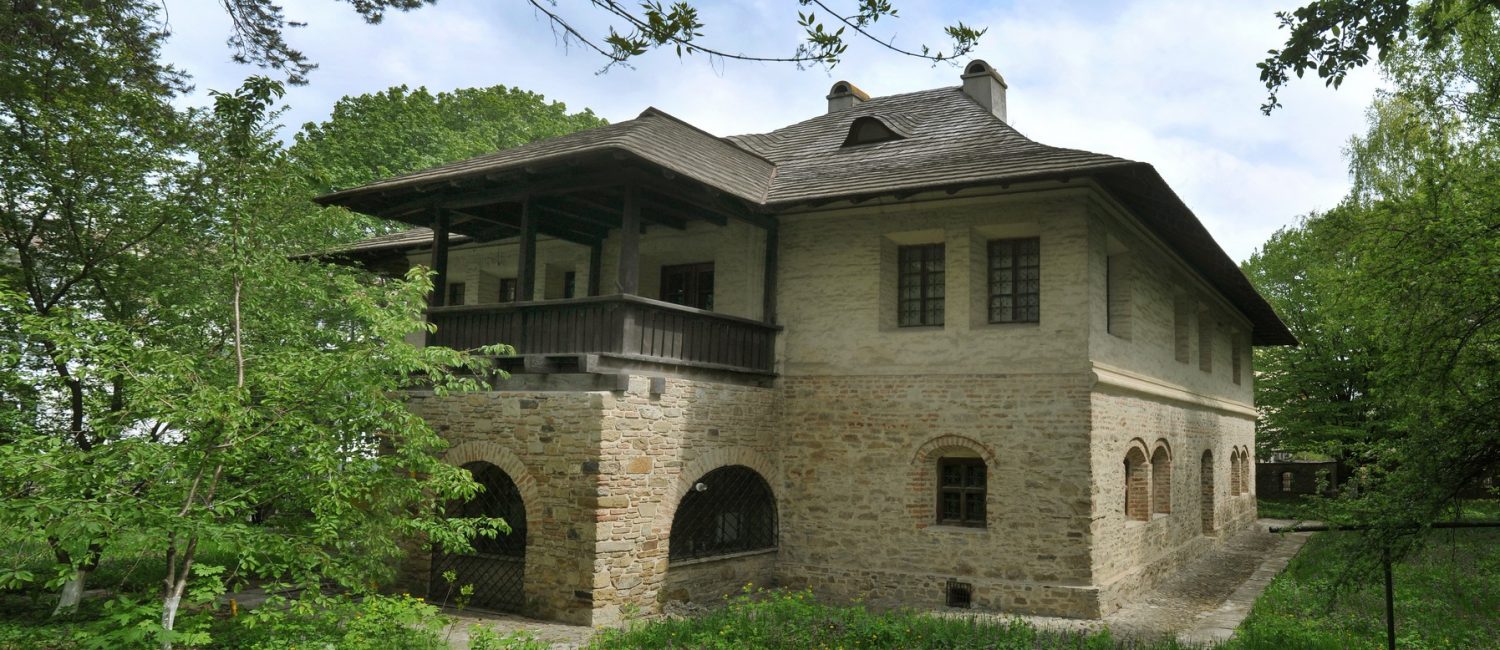
The ”Princely Inn” Ethnographic Museum, part of the ”Bucovina” National Museum Complex of Suceava, Suceava County, operates in a building first documented in 1627, which was the house of Miron Barnovschi, the ruler of Moldavia, who donated it to the Metropolitan Church of Suceava to be transformed into an inn, and the income obtained to be used for “lighting the holy relics”. The construction was later recorded in the register of properties in 1786, as a home for the members of the Habsburg imperial family when they came to hunt. Towards the end of the eighteenth century the building was bought by Baron Kapri, and in 1856 it appeared in the plan of the city of Suceava under the name of the Princely Inn, on Kaprigasse Street. After 1918, the Princely Inn became private property, and in 1962 it was passed into the property of the state. The building was fully restored between 1962-1966 and since 1968 it has been used as ethnographic museum.
The Ethnographic Museum in Botoșani, Botoșani County
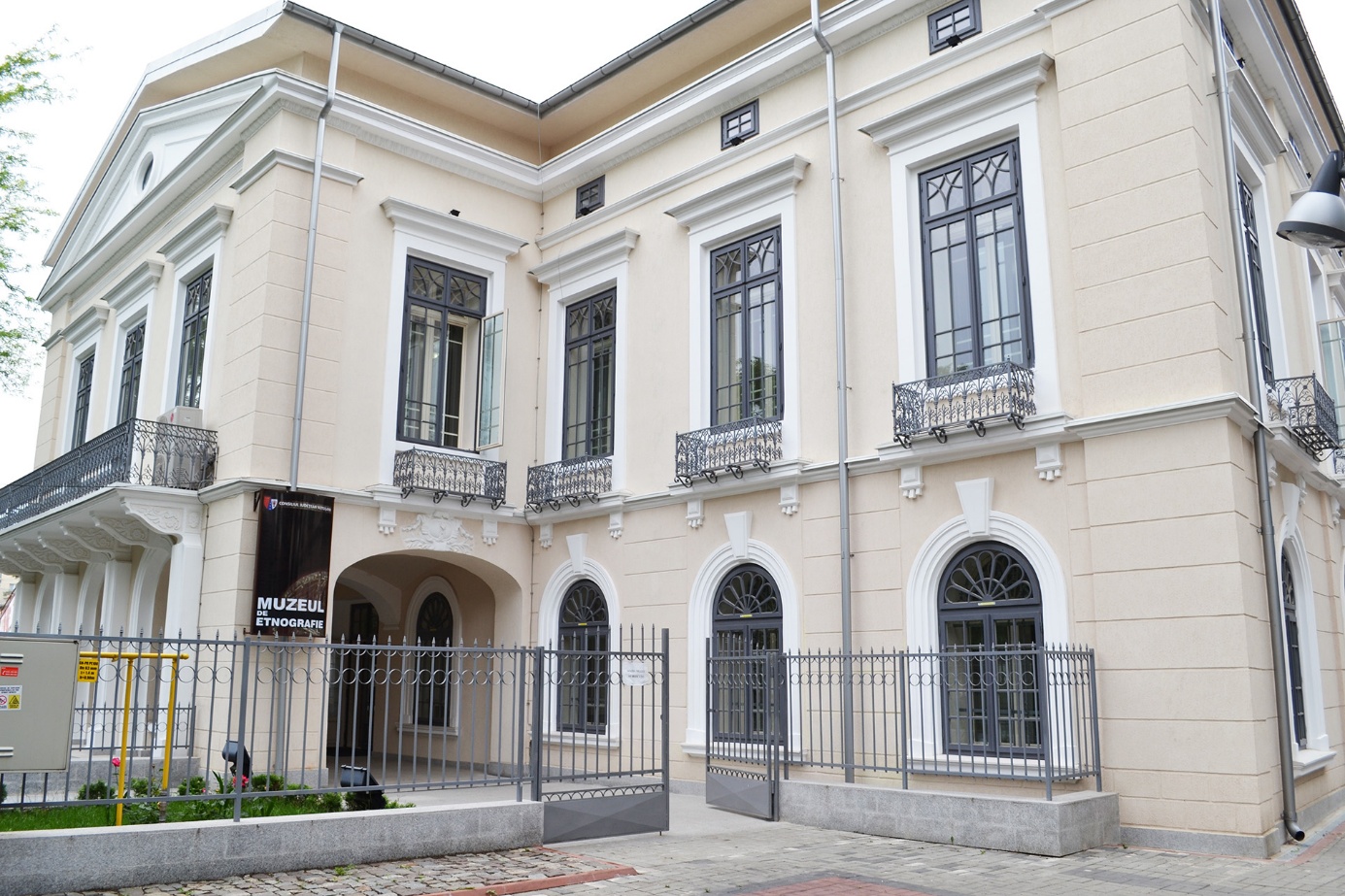
The Etnographic Museum of Botoșani is based in an 18th century building, when it belonged to Manolache Iorga, grandparent of famous Romanian historian Nicolae Iorga; in the first half of the 20th century, the edifice was owned by the architect in chief of the city of Botoșani, being known as the Saint Georges House. The first acquisitions for the Ethnographic Museum of Botoșani were made in 1957-1958. Later on, in 1967, an important donation came from priest Dumitru Grigoraş from Oraşeni-Deal. A major collection worth mentioning is the one of Maria and Nicolae Zahacinschi, counting more than 1100 items.
Initial context
The creation of a 360° virtual tour for the Ethnographic Museum of Botoșani, the Museum of Wood Art in Câmpulung Moldovenesc, and the Princely Inn of Suceava was both a technical endeavor and a cultural responsibility. Each of these museums embodies unique aspects of regional identity – traditional village life, artisanal woodworking, and medieval Moldavian hospitality. The goal of the virtual tour was to open these spaces to audiences who may never step inside physically. The process of crafting immersive digital experiences was built with careful planning, good technical work, and respect for the heritage preserved in the museums.
Key expectations
The main objectives of the created tours were:
- to facilitate the visit of the museum for people with mobility difficulties as well as for those who are far away from the museum but are interested in discovering new information
- to ensure their engagement and interaction in the museum explanations
- to provide a 360 tour that would help them get a glimpse of the traditional world, so to improve their understanding of the natural and cultural heritage
Production process
Our work began with the pre-production research, a stage too often underestimated. Before any camera was set on the tripod, we went through each building, observing not just the exhibits but the atmosphere: the direction of the light through old windows (extremely important whenever there are glass casings), the flow of visitors through hallways, and the narrative that the museum intends to convey. At the Ethnographic Museum of Botoșani, this means taking note of traditionally recreated interiors, the placement of costumes, and the arrangement of household objects in rural communities. At the Museum of Wood Art in Câmpulung Moldovenesc, where carved sculptures and intricate wooden objects dominate the space, attention is drawn to textures and forms that must be faithfully captured. Meanwhile, the Princely Inn in Suceava offers a different challenge: its vaulted medieval rooms, historical displays, and architectural character rely heavily on spatial depth, which a 360° tour must translate without distortion.
From these observations emerged a conceptual map of the virtual tour that tried to replicate how the visitor might naturally walk through each part of the museum. Planning the locations of these camera nodes ensured fluid navigation once the tour is assembled, and it also allowed us to coordinate with the great and helpful museum staff, scheduling sessions before the groups were able to walk through the museum.
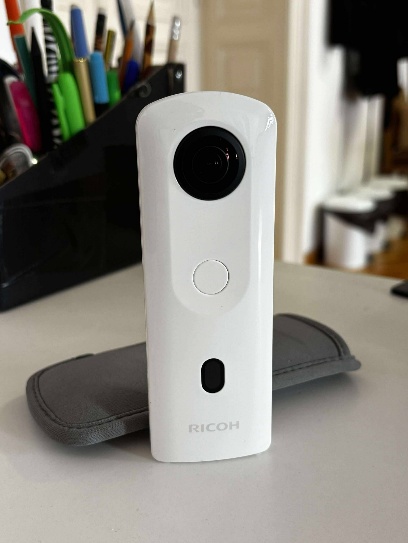
The technical phase begins with the selection of equipment suited to the environments of the three museums. We used the Ricoh Theta S2 camera—not the latest one released, but one able to capture high-resolution spherical images, Affinity Photo Editing software for lighting and retouching, and the 3d Vista Virtual Tour software for producing the virtual tours. In addition, because museum lighting can vary widely, from dim traditional rooms to bright halls with large windows, manual exposure settings become essential for maintaining consistency across panoramas, and for this, we also used three studio lights to properly capture the small details. In wooden interiors such as those in Câmpulung Moldovenesc, HDR helped us retain detail in both shadows and highlights, preserving the warmth and complexity of the carved surfaces as much as we could.
 |
 |
 |
| The camera we used | The photo editing software | The virtual tour software |
The whole process was as choreographic as one can imagine: the camera was placed in the center of the room / hallway allowing it to capture the entirety of each space in a single shot. At the Ethnographic Museum in Botoșani, placing the camera among traditional costumes displays ensured that every artifact was visible without obstruction. In the Museum of Wood Art, our camera work avoided shadows while putting in perspective the craftsmanship of the wooden details. And in the Princely Inn, the panoramic perspective revealed the depth of stone arches and the structure of the rooms, inviting virtual visitors into an environment that needed many secondary pictures for a perfect zoom-in experience.
Overview of the tool
Based on the initial discussions with the associated partners, the team of CMNM proposed to create a digital 360 tool that would increase the online and offline digital accessibility of the three museums.
Editorial approach
The 360 shooting was performed in the permanent exhibitions only.
The shooting is completed by text information in Romanian and photos of some of the most important items in the exhibits
Technical approach
Once the footage was collected, the material entered the world of post-production, a phase that took quite some time. We used the aforementioned software for correcting seams and stabilizing the geometry of each panorama. This stage was crucial not only for the photo quality but also for capturing the depths of the exhibits; a poorly stitched panorama can distort the story of a piece, creating an inaccurate representation of cultural heritage.
Following the editing process, we gathered the required information from the specialists in each of the three museums, and based on our visual outcome, we managed to craft the story in a slightly narrative way. Hotspots guided visitors from one room to another, informational tags added context to the exhibits, and optional narration turned the tour into a full educational experience for all ages.
Finally, the completed tour was exported and prepared for sharing across websites and VR compatible platforms. Before the release, the final cut went through a careful review in consultation with the museum curators, who ensured that each detail respects both factual accuracy and cultural meaning. Only after these evaluations did the virtual tour become available to the public.
Issues encountered
Technical limitations related to the digital skills of the museum staff for uploading the created tour on the own websites
Measures adopted
The 360° degree tour was delivered in all formats exportable from the software, so to ensure its smooth running on all platforms (smartphones, tablets, laptop, PCs, online and offline)
Users’ feedback
Visitors rated the tour very positively. The 360 digital introduction to the museum experience is attractive to a wide variety of visitors, not only for those with mobility difficulties.
Conclusion
Increasing digital accessibility by means of the 360° tour was also appreciated by the end-users, with or without mobility impairment. Making the tour available on the internet, entirely or even parts of it, acts as a trigger that contributes to audience development.