


To close their project, REACT partners have been sharing the project’s results with cultural professionals across Europe, showing how accessibility is not an add-on, but a long-term approach to designing richer cultural experiences for everyone. Through local meetings, professional fairs and collaborative workshops, these dissemination events helped transfer knowledge, test ideas in real contexts, and encourage museums and cultural sites—especially smaller institutions—to adopt inclusive practices and accessible digital mediation both on-site and online.
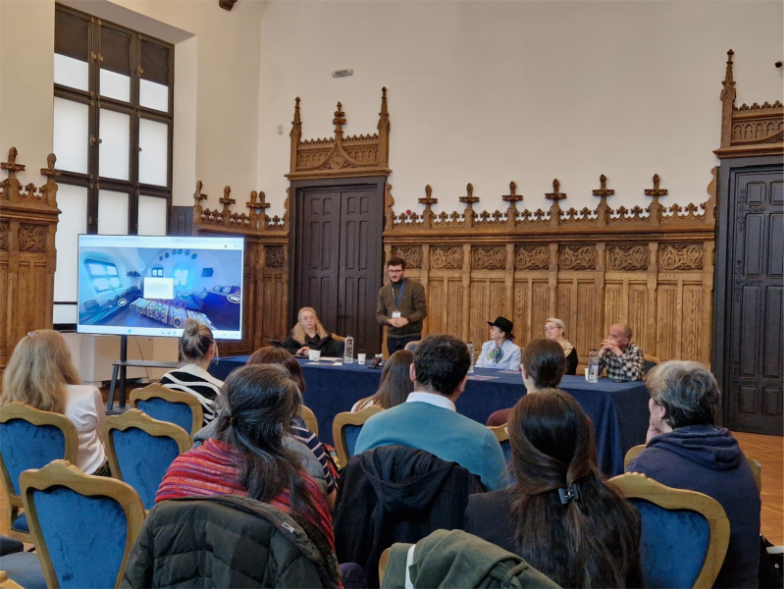
The first dissemination event of the REACT project took place in Iași, Romania, being organised by the Romanian partner, the ”Moldova” National Museum Complex, in order to share the knowledge acquired within the project context and the results obtained in the same framework, to the local and regional stakeholders. The event took place on 10 December 2025, at the Palace of Culture, in the ”Petru Caraman” Hall of the Ethnographic Museum of Moldavia. The audience included representatives of the other museums in the city, such as the Literature Museum, the Metropolitanate Museum or the Museum of ”Alexandru Ioan Cuza” University, but also of various cultural and educational organisations such as the Faculty of Philosophy and Social-Political Sciences within the ”Alexandru Ioan Cuza” University or of the ”Moldova” Special Highschool of Târgu Frumos.
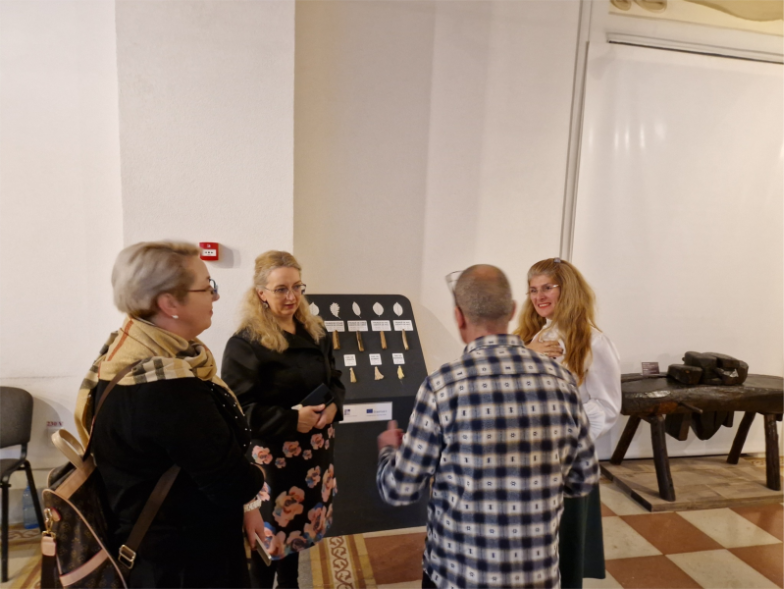
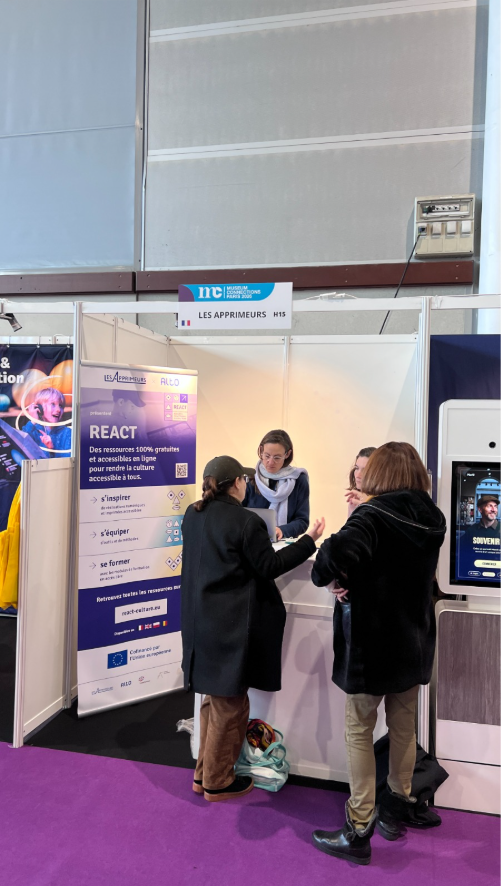
As part of REACT’s dissemination activities, Les Apprimeurs presented the project at Museum Connections 2026 in Paris (13–14 January 2026), making a significant contribution to the project’s overall dissemination reach through a major international gathering of museum, cultural and tourism professionals. This growing event brought together 6,332 participants (21% international), 403 exhibitors (37% international) and 68 conferences, offering a strong platform to share REACT’s approach and practical tools for inclusive on-site and digital mediation. Through exchanges at their stand, Les Apprimeurs highlighted their methodology for embedding accessibility from the outset and showcased concrete examples of accessible and Easy-to-Read (FALC) visitor supports developed with partner institutions—demonstrating how barrier-free mediation broadens audiences and strengthens cultural venues as spaces of participation and inclusion.
To complete the ‘in real life’ element of the French dissemination event, Alto organised an online work session with the Musée des Manufactures de Dentelles in Retournac, France, on Thursday, 29 January 2026. This museum opened in 2007 in a former lace factory. It is dedicated to lace and the history of its production.
Fanny Roilette, the museum’s director, gave a presentation about the institution and its mediation offer. Then, two working groups were organised with the museum’s employees. Each group had an hour and a half to brainstorm solutions to improve the museum’s inclusive mediation offer.
The group led by Les Apprimeurs proposed several ways to make the museum more accessible for people with cognitive disorders or autism. For example, they suggested adding a visit scenario to the website to help visitors understand what the onsite visit will entail, following the example of the Musée de Bordeaux. The group led by Alto took inspiration from the Musée Gadagne in Lyon to design a ‘Choose Your Own Adventure’ game for families, in which visitors would have to decide how they would act if they were the director of a lace workshop in the early 20th century.
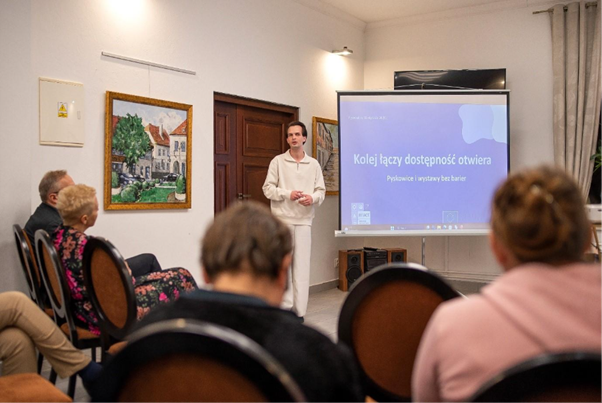
On January 18th, a unique event entitled ‘Railway connect. Accessibility opens. Pyskowice and barrier-free exhibitions’ took place at the Town Hall in Pyskowice, Poland – the Exhibition Centre of the Municipal Centre for Culture and Art.
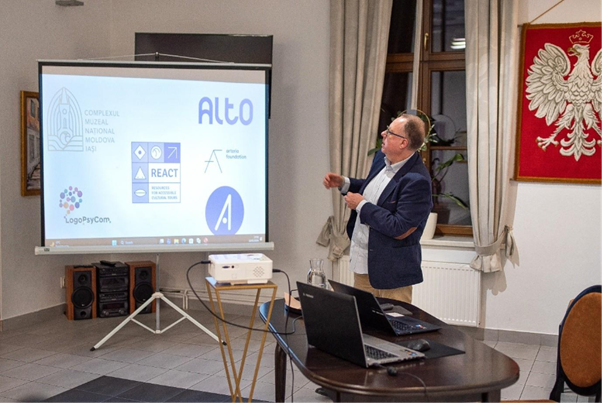
The meeting in Pyskowice was attended by the city’s deputy mayor, representatives of cultural institutions and organisations, and people with disabilities. The event demonstrated that accessibility is not only about removing architectural barriers, but also about consciously designing cultural experiences so that everyone can participate fully and enjoyably. The presentations by experts, touching on both the local history of the city in the context of the inclusive tour experience developed jointly by the ARTeria Foundation, the Polish partner of the project, in cooperation with MOKiS and Stacja Pyskowice, emphasised the importance of including diverse voices already at the stage of planning and implementing cultural activities. Piotr Borowiak talked about the birth of the exhibition ‘Pyskowice Miasto. Od pasji do wystawy’ [Pyskowice City. From passion to exhibition], while Aleksandra Jakubowska from the Exhibition Centre discussed the issues of exhibitions and accessibility in cultural institutions. Wenancjusz Ochmann from the ARTeria Foundation presented the results of the REACT project.
These presentations on local history are available for all. Practical accessibility challenges and European solutions clearly showed that accessibility in culture is not a one-off activity, but a process that requires attention, cooperation and openness to the diverse needs of audiences. It was emphasised that barrier-free exhibitions not only broaden the audience but also strengthen the role of cultural institutions as places of encounter, dialogue and social inclusion. The discussion and networking enabled the exchange of experiences and good practices, and the opportunity to visit the exhibition became a concrete example of how accessibility in practice enriches the experience of all audiences – regardless of age, ability or mode of information reception.
Photo: Karolina Kasprzak-Szczerbak
Logopsycom organised two final events within the REACT project. Each is aiming to reach different audiences. The first event took place on January 9th and was an in-person meeting at Mundaneum, one of Logopsycom’s associated organisations, with whom Logopsycom collaborated throughout the project. The event was held in French, addressing the French-speaking local community of museum professionals. The second final event was an online webinar held in English organised on January 19th. This event aimed to reach not only the French-speaking Belgian community, but also other museum professionals in Belgium (for example, from the Flemish region) and abroad. Both events took place in January 2026 and received positive feedback from their participants.
REACT came to a close, but the work continues: the partnerships created and the tools developed during the project will keep supporting cultural institutions in building more inclusive visitor experiences. Follow REACT and the partner organisations on social media to stay updated on upcoming collaborations with museums and cultural sites, discover new accessible mediation projects, and see how inclusive cultural practices can sustainably grow across Europe.
Links :
The accessibility page on the website of the Muséum of Bordeaux.: https://www.museum-bordeaux.fr/en/accueil/accessibilite
‘Une vie de canut’ game at the Musée Gadagne in Lyon : https://www.plateforme-mediation-museale.fr/mediations/une-vie-de-canut